
Environmental Health Sciences
The Department of Environmental Health Science (EHS) investigates how the environment influences human health. Our faculty and students explore this complex set of interactions at every level from micro to macro—from the ways that molecules of pollutants alter DNA to the impact of climate change on global patterns of disease. They collaborate with scientists and health officials across New York City, the country and around the globe to address environmental threats to health in communities worldwide.
Our faculty is our greatest strength and asset. EHS faculty have one of Columbia University’s highest ratios of federal research funding per faculty member. Their extensive reach and impact has been recognized by the Chronicle of Higher Education which, in a survey of EHS departments nationwide, identified ours as having the largest number of publications, citations, and new grants per faculty member.
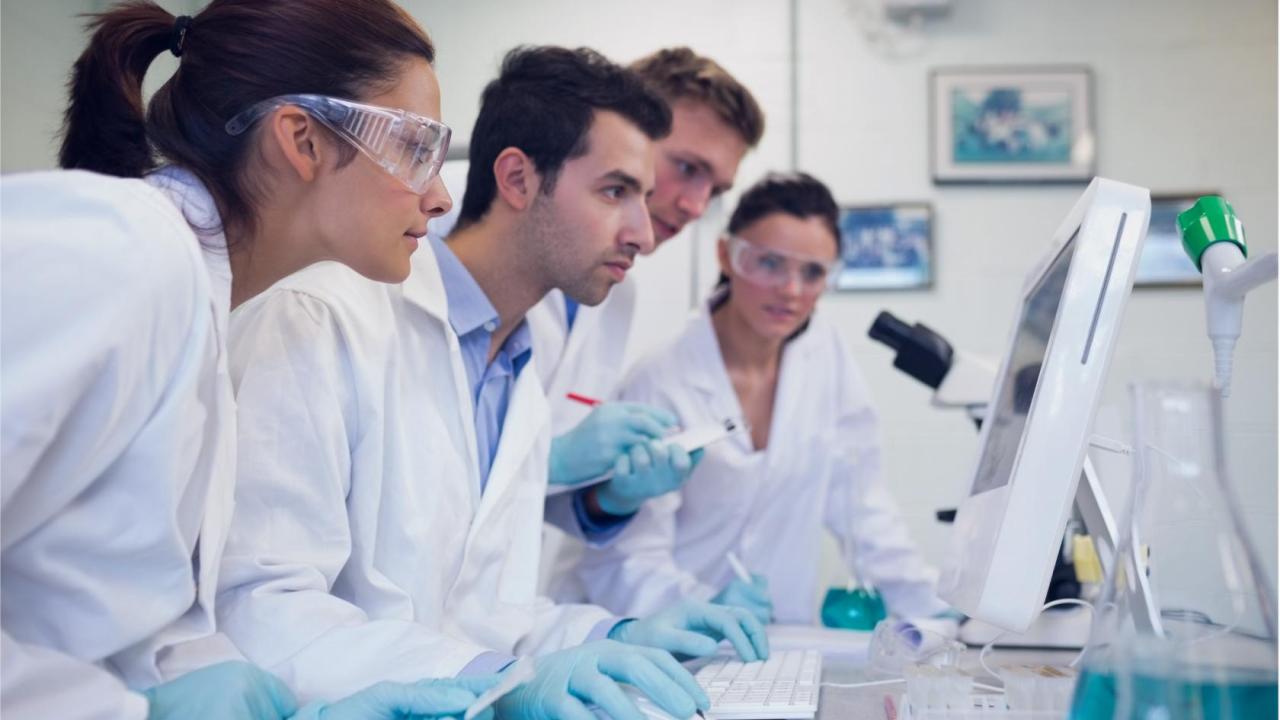
EHS enjoys state-of-the-art laboratories that opened their doors in 2010. The department has the School’s largest number of labs measuring 10,000 sq. ft. in total. Many of our MPH students are involved in laboratory and non-laboratory-
based studies. A low student-to-faculty ratio gives our students ample opportunities to work closely with professors.
Degrees
Department Contacts
Our faculty are engaged in research projects and applied programs that touch on nearly every aspect of environmental health. See some examples below. View a complete list of EHS faculty.
- Molecular Toxicology
- Basic and Applied Nutritional Science: Emerging Global Issues
- Biological Markers of Chemical Exposure
- Fundamentals of Toxicology
- Case Studies in Risk Assessment and Environmental Policy
- Water and Infectious Disease
- Principles of Genetics and the Environment
- Frameworks for Environmental Health Policy
- Public Health Impacts of Climate Change
Practicums are individually selected and tailored to meet the needs and interests of each MPH student. They enable students to clarify their career goals and often lead to permanent positions upon graduation. Recent practicum placements have included:
- Bristol-Myers Squibb
- CHF International Ghana
- Columbia Center for Children's Environmental Health
- Earth Institute, Columbia University
- Exxon Mobile
- New York City Department of Health and Mental Hygiene
- New York City Office of Emergency Management
- UNICEF
- United Nations, Environment Division
- United Nations, World Food Programme
- U.S. Environmental Protection Agency
- WaterAid
Positions that recent graduates from MPH and doctoral programs have assumed after graduation include:
- Operations Manager, US Medical Affairs, Bayer Healthcare
- Clinical Research Coordinator, Department of Medicine, University of California – San Francisco
- City Research Scientist, Bureau of Environmental Surveillance and Policy, New York City Department of Health and Mental Hygiene
- Research Assistant, Council on Foreign Relations
- Biological Safety Officer, Department of Environmental Health/Safety, Columbia University Medical Center
- Clinical Veterinarian, Columbia University Institute of Comparative Medicine
- Global Health Fellow, Global AIDS Program, Centers for Disease Control
- Robert Wood Johnson Health and Society Scholar
- Assistant Professor, University of Massachusetts at Amherst
- Postdoctoral Research Fellow, The Institute for Cancer Genetics, Columbia University
- Senior Safety Engineer, Pfizer